

Bridget Regan
For the last decade, subscriptions have largely meant one thing: access to content.
Pay monthly to unlock articles. Pay monthly to watch videos. Pay monthly to hear premium podcasts. Pay monthly to join communities. Pay monthly to take courses.
That model built massive businesses. Netflix turned entertainment into a recurring habit. Spotify did the same for music and podcasts. Substack helped writers monetize audiences directly. Patreon made fan support mainstream. OnlyFans carved out its own category entirely.
But we're approaching the limits of content alone.
Consumers already have more newsletters than they can read, more podcasts than they can finish, more courses than they can complete, and more communities than they can meaningfully participate in. The bottleneck is no longer supply. It's attention. And at the same time, the demand side is becoming more demanding.
From Passive Consumption to Active Utility
The next generation of subscriptions won't just give people more things to consume. They'll give people someone to interact with, in real time. One-on-one.
That means:
- Asking questions and getting personalized answers
- Receiving guidance in real time
- Practicing skills through back-and-forth dialogue
- Accessing expertise on demand
- Feeling progress, not just information overload
- Knowing that who you're talking to remembers you from yesterday
This is why conversational products feel different. They're not competing with libraries of content. They're competing with all the friction, confusion, and delay that come with traditional subscriptions.
A subscriber who never watches a premium video may cancel. A subscriber who uses a product every week to solve real problems often won't.
Why Conversation Drives Retention
Most subscriptions fail because the value feels delayed or optional.
People say "I'll get to it later." "I haven't had time." "I forgot I'm paying for this."
But products that solve problems in the moment create a different psychology: immediate relevance, habit loops, recurring utility, emotional connection, lower churn.
That's why Duolingo leans so heavily into daily interaction rather than static lessons. It's why Notion became sticky through ongoing utility, not one-time content dumps.
Usage is retention. Conversation drives usage.
We've Seen This Pattern Before
Every major platform eventually moves closer to interaction.
YouTube started with passive viewing, then layered comments, memberships, live chat, community posts, and direct fan relationships. LinkedIn evolved from resumes to content, then messaging, newsletters, events, and creator tools. Discord became valuable not because of static content, but because people could engage in real time.
Content attracts attention, but conversation builds retention.
Why This Matters for Coaches, Creators, and Personal Brands
If you're a coach, educator, creator, or niche authority, your audience often wants more than another video or another newsletter.
They want:
- "What should I do in my situation?"
- "Can you explain this in simpler terms?"
- "Help me apply your framework to my business."
- "Give me accountability this week."
- "Role-play this sales call with me."
- "Summarize everything you've taught on this topic."
Traditional content can't answer individualized demand at scale. Conversation can.
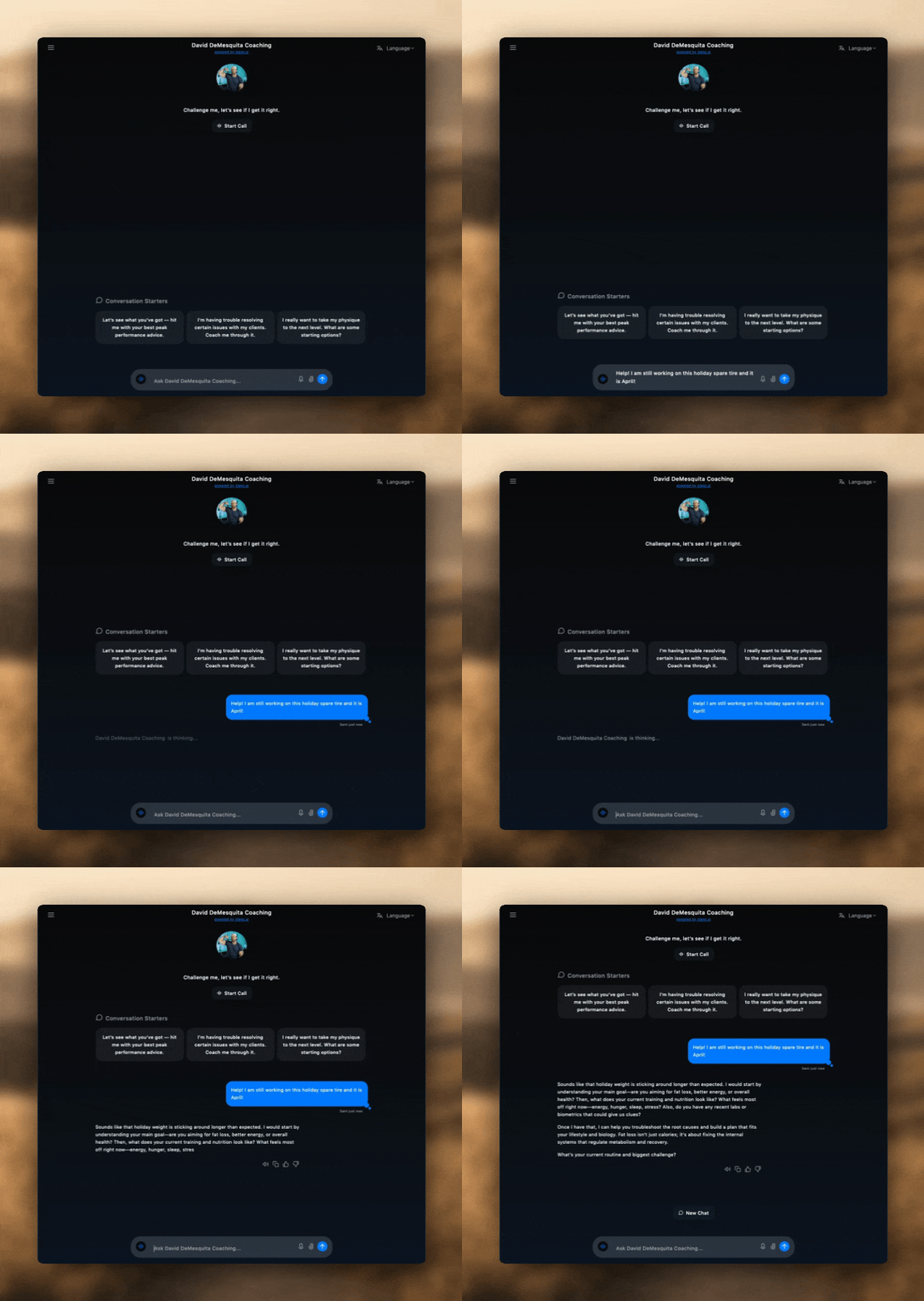
This is exactly why we built AI Twins at Steno.ai. An AI Twin is trained on a specific person's voice, knowledge, and frameworks, then made available to their audience 24/7. It's not a chatbot with a FAQ list. It's a digital version of the expert that can coach, teach, and connect in real time, in their voice.
What the Best Subscription Businesses Will Build Next
Expect the biggest subscription businesses to look like a three-layer stack:
1. Content as a baseline. Articles, videos, podcasts, frameworks, archives. This is what brings people in.
2. Community in the middle. Peers, belonging, accountability, live moments. This is where the coach or creator speaks one-to-many.
3. Conversation on top. Personalized, on-demand interaction that helps members take action now. This is where the coach or creator speaks one-to-one with every member of their audience.
That third layer is where the next wave of winners will emerge.
The Shift from Access to Responsiveness
We're moving from the era of paying for access to the era of paying for responsiveness.
People don't just want premium information anymore. They want momentum. They want help when they're stuck. They want clarity faster. They want expertise that talks back.
The next subscription boom won't be built by whoever publishes the most content. It'll be built by whoever makes people feel consistently supported and understood. And that support needs to happen at the speed of real conversation.